
Automotive trade
Autopia
Marketplace for importing and selling American vehicles.
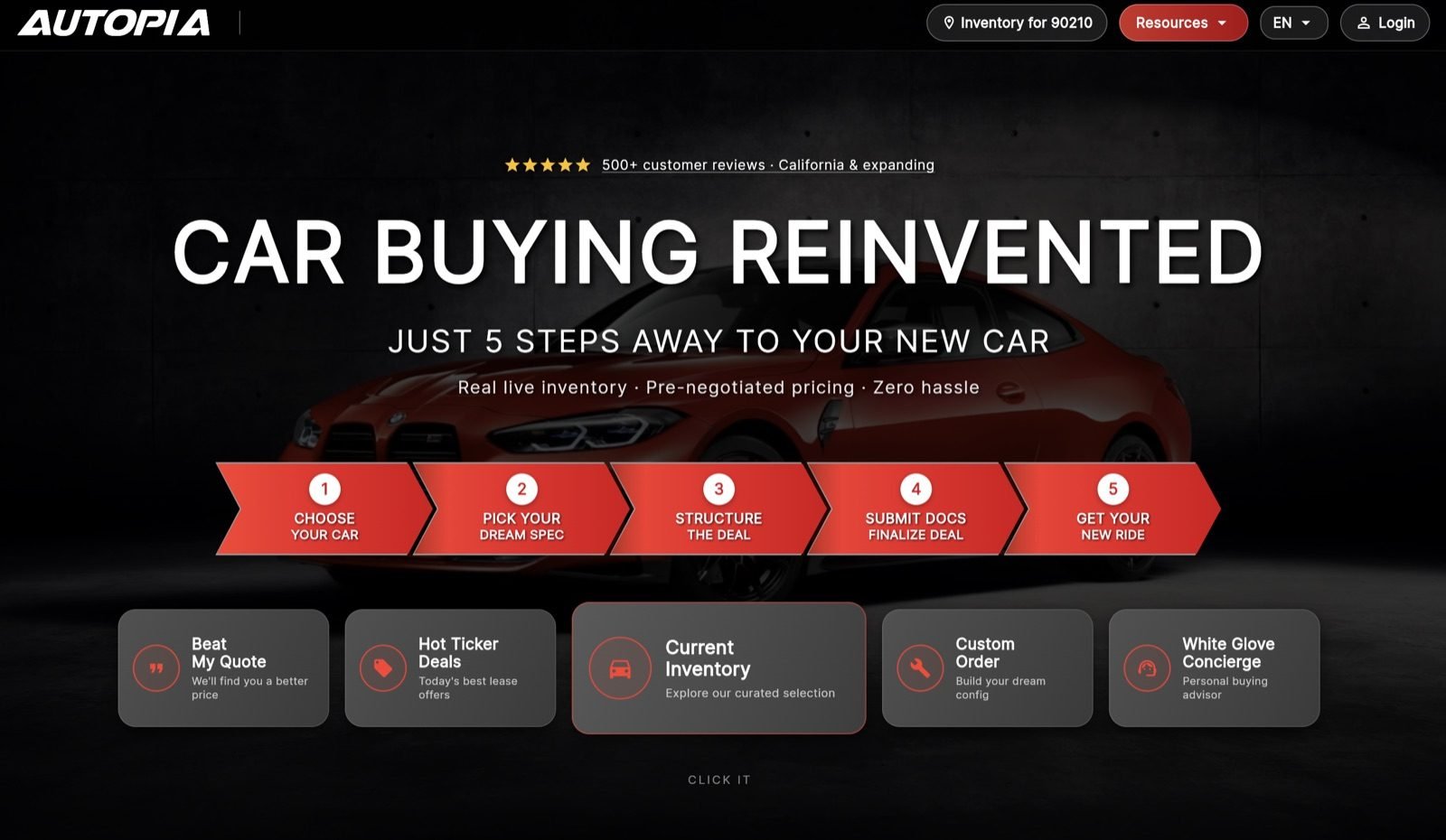
Context.
Buying an imported vehicle remotely requires a level of trust that traditional trade establishes through physical presence. The whole difficulty of the project sat there: allowing a buyer to commit to a vehicle they have not seen, with enough information for the decision to be informed rather than a gamble.
The second issue was file management. An imported vehicle carries multiple costs — acquisition, transport, customs, refurbishment — and omitting them or attaching them to the wrong file destroys unit margin without anyone noticing before year end.
Delivered scope.
- 01Catalogue of individual vehicles with detailed specification, condition and history
- 02Buyer journey designed for remote commitment, from interest to reservation
- 03Management of sales files and the administrative steps of importation
- 04Tracking of costs attached to each vehicle and of holding period
We treated the catalogue as the core of the system rather than as a shop window. Since each vehicle is a distinct unit, the data model was built on the vehicle identifier rather than on a product reference, which in turn governs cost capitalisation and margin calculation. The buyer journey was designed around removing uncertainty: completeness of information, visibility of upcoming steps and of committed timeframes.
What it changed.
A credible remote sales channel for a high-commitment purchase
Sales files tracked from initial interest through to delivery
A basis for calculating true margin per vehicle, ancillary costs included
Some information is deliberately omitted at the client's request.
A situation close to yours?
After an initial scoping conversation, we can put you in touch with a client in a comparable industry.